
Mark Zuckerberg Bought a Chinese Robot Dog for His Daughter. What's the Story Behind It?
Original by
Unique Research (非凡产研)
Published: September 2, 2026, 12:00 Shanghai
AI Industry Observation
Hit $1 million in crowdfunding? Time for a celebration dinner? The hard part is just beginning.
"What you think is the finish line is actually the starting line; the number you think matters most is precisely the one that matters least."
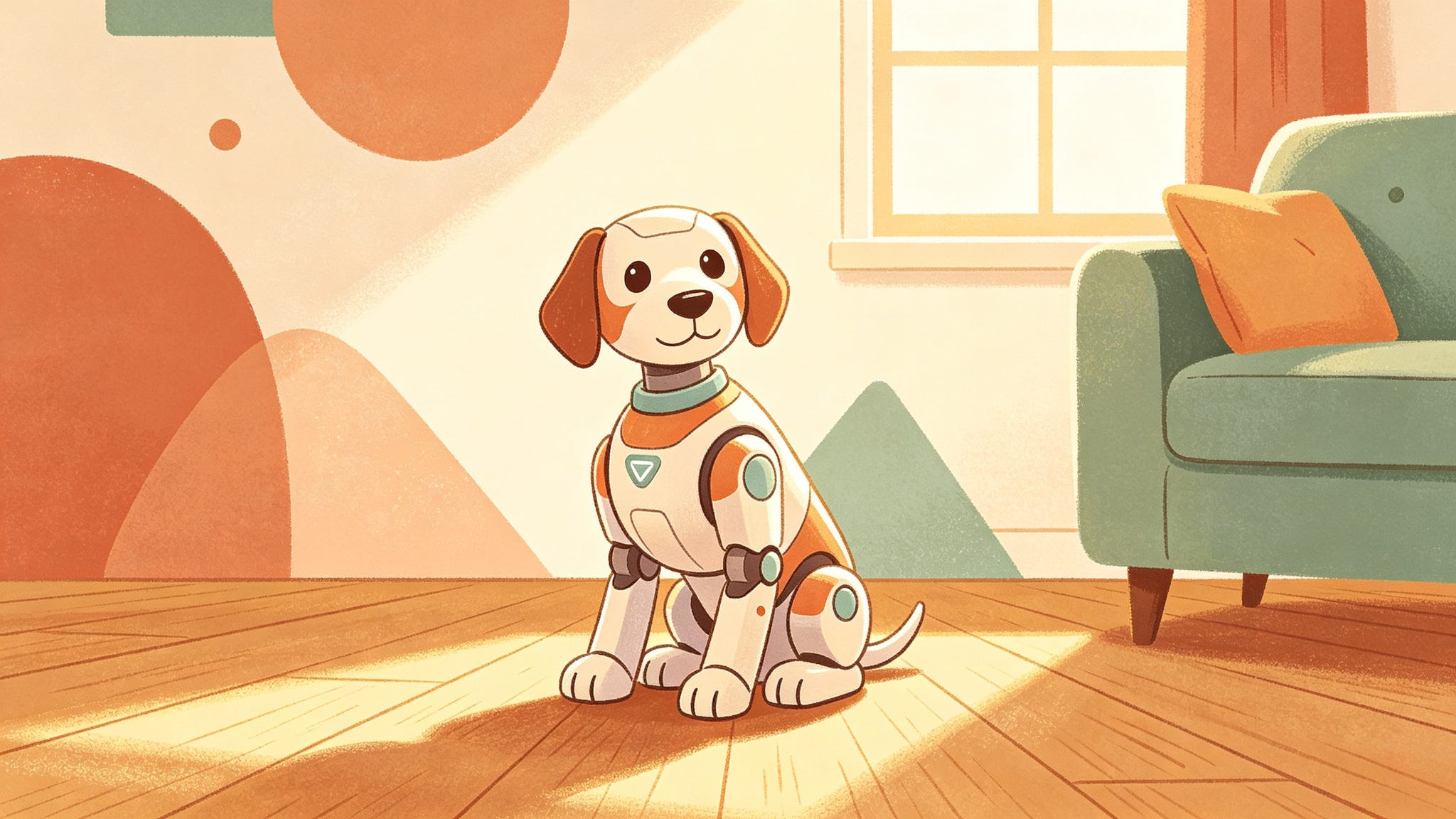
Mark Zuckerberg once used his personal email to buy a robot dog made by a Chinese team—for his daughter.
This never made it into any press release. The person who discovered it was the founder himself, Li Rongzhong. To this day, he monitors every support email, personally replying to roughly a third of them. One day, that name popped up in his inbox.
You might wonder: for a hardware company, is it really worth the founder's time to do customer support?
Li Rongzhong's answer: absolutely. Over years of doing support, he's received enormous amounts of direct, sincere user feedback—and some unexpected surprises, like the Zuckerberg order. His exact words: "This is the kind of thing you only encounter when you're actually on the front lines serving users."
At the Shenzhen Physical AI Summit, a panel on AI hardware going global was titled "After the Crowdfunding Hit: How to Really Reach the World's Shelves." Four people on stage: Li Rongzhong (consumer robotics), Wu Danni (scalp care brand), Gu Mingjun (Indiegogo China Head), and Kang Zhengzhong (whose AI ring would hit Kickstarter the following month).
The four discussed one core question: when you hit $1 million in crowdfunding, is it time for a celebration dinner?
The answer: quite the opposite. The hard part is just beginning.
Below is the panel highlights, edited by Unique Research.
Kang Zhengzhong: Let me start with a direct question. When you hit $1 million in crowdfunding, what did it feel like? Did you think you'd finally made it?
Li Rongzhong: Honestly, when that $1 million number came in, our team was genuinely excited. But right after the excitement, you immediately realize something: behind that $1 million are thousands of users waiting for you to ship. You took their money, so you have to deliver. And what you're delivering isn't a simple product—it's complex hardware with AI, software, and OTA updates.
I've talked to many hardware friends since, and we all share one consensus: $1 million in crowdfunding is not the finish line, it's the starting line. The number you think matters most is precisely the one that matters least. What really matters is what comes after: Can you ship on time? What's the quality of the units that go out? Will users return them after receiving? Can your software updates keep up?
Every single one of these things is ten times harder than the crowdfunding number.
Wu Danni: I completely agree. We do scalp care, and we hit a solid number in crowdfunding too. But do you know what's scariest? It's after you ship, when users start actually using the product, and then all kinds of problems surface. Some say the product doesn't work well, some say the effects aren't noticeable, some just demand a refund.
Every selling point you wrote on the crowdfunding page, users will verify one by one after they receive the product. If even one doesn't match up, the bad reviews come. And crowdfunding users are different from ordinary e-commerce users—they're the first group to believe in you, and their expectations are especially high. Once you disappoint them, the backlash is severe.
So now I tell my team: the day crowdfunding ends isn't a day for celebration—it's the day the real battle begins.
Gu Mingjun: Let me add from the platform perspective. Every year on Indiegogo, many projects hit $1 million or more, but fewer than a third of them actually survive past three years. Where do most projects die? In delivery.
Crowdfunding has one particularly big trap: during the campaign, to chase the number, you'll drive down prices and promise all kinds of things. But when you actually go into mass production, you'll find costs are completely out of control and the supply chain is full of problems. Then you start delaying—delaying until users lose patience, delaying until bad reviews flood in, and ultimately the brand dies.
So on Indiegogo, we often advise founders: don't just stare at the crowdfunding number—think clearly about the road ahead. A $1 million crowdfunding campaign, if you mess up what comes after, isn't an achievement—it's a liability.
Kang Zhengzhong: Earlier Li Rongzhong mentioned you still personally reply to support emails. I'm really curious about this. A founder's time is so precious—why spend it on customer support?
Li Rongzhong: Because customer support is the place closest to users. When you look at data dashboards in your office, you see averages and trends. But when you reply to support emails, you see individual people and individual problems.
Let me give you an example. Once, a user wrote to us saying his robot dog had a problem. I replied following the standard process, telling him how to reset and how to contact support. He wrote back a very long email saying he wasn't asking for support—he wanted to tell me that his child has autism, and this robot dog is the only thing his child will interact with. Now that the robot dog is broken, his child is devastated.
Tell me—can you see that kind of email in a data dashboard? All you'd see is a "support request," but you wouldn't see the autistic child behind it.
Why do I insist on replying to emails myself? Because only this way can I truly understand who my users are, what they're using my product for, and what they actually care about. No user research, no data analysis can replace that.
And honestly, in hardware, if the founder doesn't do customer support, big problems happen. Because people on your team might treat user problems as annoyances and try to brush users off. But the founder is different—the founder knows every user is a real person behind the screen, and every bad review can affect hundreds of potential users.
Wu Danni: I've had similar experiences. We do scalp care, and user feedback is extremely direct. Some say their scalp is itchier after using it, some say hair loss is worse. If you don't look at this feedback yourself, your team might filter it out—they only show you the good news.
But as a founder, you have to know what the worst news is. Because only by knowing the worst news can you actually solve problems.
My habit now is: every morning, read bad reviews first, then good reviews. Bad reviews keep you sober; good reviews only make you complacent.
Gu Mingjun: From the platform perspective, we strongly encourage founders to interact with users personally. Because what's the essence of crowdfunding? It's a group of people who believe in you and are willing to give you money upfront. These aren't ordinary consumers—they're your co-founders, your brand ambassadors.
If you treat them like ordinary customers, brushing them off with standard support scripts, you're wasting crowdfunding's greatest value. The greatest value of crowdfunding isn't the money—it's that first group of people who believed in you.
Kang Zhengzhong: Now that we've covered customer support, let's talk about something more hardcore: the supply chain. After crowdfunding, what was the biggest pitfall you encountered in the supply chain?
Li Rongzhong: The biggest pitfall is thinking you've found a reliable contract manufacturer, only to have everything go wrong during mass production.
During our first mass production run, we found a contract manufacturer that looked quite good. They showed us many success cases and quoted a very competitive price. We thought it was fine and gave them the order. But during mass production, the yield rate was only 60%. That means out of 100 units, 40 were defective.
Do you know what that means? It means your costs literally doubled. Because you have to pay for those 40 defective units, you have to re-produce them, and you have to delay shipping. Users are already pressing you on one side, and the contract manufacturer is still having problems on the other—the pressure is enormous.
It took us a full three months—changing the contract manufacturer, re-tuning the supply chain—before we got the yield rate above 95%. Those three months, we basically did nothing else but camp out at the factory.
So now I tell founders: when choosing a contract manufacturer, don't just look at price, don't just look at success cases. You must go to the factory and see—see their production lines, see their workers, see their quality control systems. And ideally, do a small trial run first—make 100 units, check the yield rate, then decide whether to go into large-scale mass production.
Wu Danni: Our pitfall was different. We
make personal care products, so the supply chain is relatively mature. But our problem was that during crowdfunding, order volume exceeded expectations, and the supply chain couldn't keep up.
For our crowdfunding, the goal was $50,000, but we hit over $300,000. The team was thrilled—we thought we'd gone viral. But the excitement lasted less than two days before panic set in. Because our contract manufacturer's monthly capacity was only 5,000 units, and our orders were over 20,000 units. That means at that capacity, it would take four months to ship everything.
What does four months mean? Crowdfunding users' patience is generally about two months. Beyond two months, bad reviews start coming in, and refunds start coming in.
Our solution at the time was to find three contract manufacturers producing simultaneously. But that brought new problems: the three factories had different process standards, and the products had subtle differences. After users received them, some said this one was better, some said that one was better, and some asked why the unit they received was different from others'.
So we learned our lesson: before crowdfunding, prepare the supply chain first and ensure capacity can keep up. And it's better to sell a little less than to oversell by too much. Because the cost of overselling is spending the next several months putting out fires.
Gu Mingjun: I've seen too many projects die on the supply chain. One project hit over $2 million in crowdfunding, and the team was so excited they rented a big office and hired a lot of people. But during mass production, the contract manufacturer had problems, and delivery was delayed by six months. By the time they finally finished shipping, the money in the bank had burned through and the team had scattered.
So I often tell founders: after crowdfunding success, the first thing isn't celebration—it's going to the factory. You have to personally see how your product is being made, talk to production line workers, and know what can go wrong at every step.
And always build in enough buffer. No matter how perfect you think your plan is, something will go wrong during mass production. So your timeline must include at least three months of buffer. Your financial plan must include at least 30% in emergency funds.
Kang Zhengzhong: Final question. Crowdfunding is done, products are shipped—what's next? How do you go from crowdfunding to real retail, to real globalization?
Li Rongzhong: Our path was: first serve crowdfunding users well, then through their word-of-mouth, get onto Amazon, then move into offline retail.
But there's a particularly big trap here: crowdfunding users and Amazon users are two completely different groups. Crowdfunding users are early adopters—they're willing to tolerate bugs, willing to give you suggestions, willing to grow with you. But Amazon users are ordinary consumers—they paid money, so they expect a perfect product. If there's even a hint of dissatisfaction, they'll leave a bad review.
When we first launched on Amazon, we took a big hit. Because our product was built to crowdfunding users' standards. Crowdfunding users thought the product was cool and full of potential, and they were willing to wait for updates. But Amazon users didn't think that way—they felt your product wasn't finished yet and you were selling it anyway, and they weren't satisfied.
So it took us about six months to refine the product from a "geek toy" into a "consumer-grade product." That process was ten times harder than doing crowdfunding. Because you have to fix every bug, optimize every experience, and write every piece of documentation clearly.
And Amazon's rules are completely different from crowdfunding. In crowdfunding you can update slowly; on Amazon you have to get it right the first time. Because Amazon bad reviews are permanent—one bad review can affect your sales for years.
Wu Danni: Our path was different. We went directly from crowdfunding into offline retail, partnering with channels like Sephora and Target.
But offline retail has even more traps than online. First is payment terms—offline channels typically have 60-to-90-day payment terms, some even longer. That means after you ship, you wait two to three months to get paid. For a startup, that cash flow pressure is enormous.
Then there's returns. Offline channel return rates are much higher than online. And they don't return products to you—they just deduct from your payment. You ship 1,000 units, and maybe only 800 get settled in the end—those 200 units just disappear somewhere.
Plus slotting fees, promotion fees, display fees—all kinds of fees. When you add it all up, you might have sold a lot of product but made no money in the end.
So now I tell founders: don't think getting into Sephora or Target means you've made it. That's just the beginning—there are more traps ahead. You have to crunch the numbers carefully, prepare your cash flow, build out your team, and only then touch offline retail.
Gu Mingjun: From the platform perspective, we see many successful projects follow the same path: first crowdfunding to validate the product; then Amazon to validate scale; then offline retail to validate the brand.
But here's the key: between each step, you need enough accumulation. You can't just finish crowdfunding and rush onto Amazon. You have to serve your crowdfunding users well, refine the product, build word-of-mouth, and then go to Amazon.
Similarly, you can't just get Amazon working and rush into offline. You have to build online profit margins first, build brand awareness, stabilize the supply chain, and then touch offline.
Globalization is the same. Many people say from day one that they want to tackle the global market, but in reality, just getting the US market right is already impressive. Once the US market is working, you can move into Canada, the UK, Australia, and similar markets naturally. Then consider Europe, Japan, the Middle East, and other markets.
Kang Zhengzhong: Let me add an observation of ours. Many hardware founders have a misconception: they think crowdfunding success equals product success equals brand success.
But in reality, crowdfunding success only proves one thing: a group of people is willing to pay for your idea. That's just the first step. After that comes product validation, scale validation, brand validation—and each step is harder than the last.
So I completely agree with what everyone has said: $1 million in crowdfunding isn't the finish line—it's the starting line. And a very difficult starting line at that.
The number you think matters most is precisely the one that matters least. What really matters is whether you can deliver afterward, whether you can iterate, and whether you can truly enter users' lives.
Kang Zhengzhong: Finally, each of you—give one sentence of advice to founders who are currently doing crowdfunding or preparing to do it.
Li Rongzhong: The founder must do customer support personally. How close you are to your users is how close you are to success.
Wu Danni: On the day crowdfunding ends, don't throw a celebration dinner—go to the factory. Your product is in the factory, not at the celebration dinner.
Gu Mingjun: $1 million isn't an achievement—it's a responsibility. You took users' money, so you have to be responsible to them to the end.
Kang Zhengzhong: I'll add one: don't fall in love with your crowdfunding numbers—fall in love with your users. Because numbers disappear, but users don't.
Panel source: Shenzhen Physical AI Summit · AI Hardware Going Global Panel "After the Crowdfunding Hit: How to Really Reach the World's Shelves"
Panelists: Li Rongzhong (Consumer Robotics Founder), Wu Danni (Scalp Care Brand Founder), Gu Mingjun (Indiegogo China Head), Kang Zhengzhong (AI Ring Founder, Moderator)
Edited by: Unique Research (非凡产研)
Original publication: September 2, 2026, 12:00 (Asia/Shanghai), WeChat Official Account "非凡产研"
This is a complete English translation of the full Chinese original. All names, companies, numbers, and claims are preserved as stated in the source. Where the original uses colloquial Chinese expressions, the translation preserves the meaning in natural English without adding or omitting substantive content.