
Original · Unique Research / 非凡产研 · 2026-07-23 · Chinese source: https://mp.weixin.qq.com/s/QR9ecB1_0JTFDMG8UbwZCg
Editor's note: This is a complete English rendition of the source roundtable transcript from the WeChat Official Account. Speaker attributions, predictions, and company claims are retained as the speakers' own statements. The "70%" figure is the article title's framing, not a verifiable market statistic. Source images are not processed per task scope.
---
AI Industry Observation
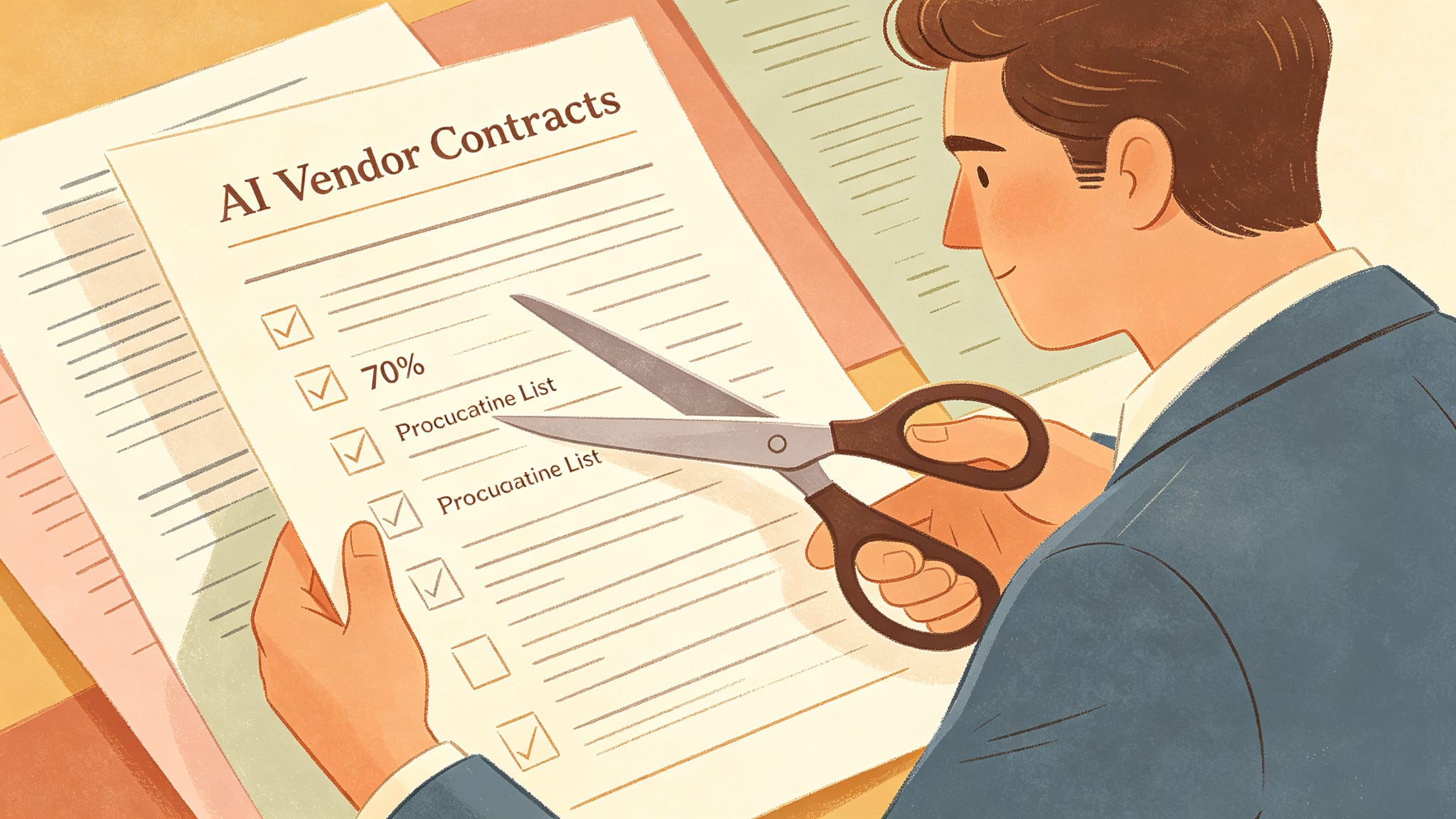
A department churns out 1,000 extra PPTs a month; in the boss's eyes, that just burned an extra 100,000 RMB in tokens.
"Enterprise AI deployment has one and only one main narrative: how to use AI to improve efficiency, and turn that efficiency into profit."
An enterprise's business department bought an AI product, used it furiously—the work of 5 people now flies, producing 1,000 extra PPTs a month. The department felt its efficiency doubled and went to the boss with good news.
The boss did the math: efficiency went up, but company profit didn't change at all. Those 1,000 PPTs were, in his eyes, just 100,000 RMB of extra token spend this month.
The person telling this story is Shen Tao (沈涛) of FanRuan (帆软). FanRuan has done data analysis for 20 years, served 46,000 enterprises, and internally built seven AI products nicknamed "Seven Calabash Brothers." The one Shen Tao leads is called Moss; it launched April 1 this year, just over 100 days ago.
"After efficiency improves, how does profit improve? Whoever can answer that question clearly will have a massive AI budget from the boss. That's the main thread of today's piece. The whole panel talked about decision-makers, data, tacit knowledge, clients building in-house—but you'll find all topics circle back to this one question."
Start with a counterintuitive point: who actually signs off on an AI project?
For traditional software projects, the answer is clear—IT leads, business cooperates on acceptance. Because selling software is selling features; once the feature goes live, the project ends.
But the four panelists' answers were uniformly "different."
Zhai Xingji (翟星吉), founder of Yuhe Technology (语核科技), says AI projects are always top-down driven, but the real lead is the business department. His logic is worth pondering: most companies buying an Agent product aren't buying software—they're making a production investment, like a manufacturing company investing in a production line, buying advanced labor services. So the decision chain becomes: the business department truly calculates ROI, goes to the boss and says "this helps us raise output or cut costs," and the boss says "buy it now."
Shen Tao breaks it down further. Sign-off has two layers: whether the company invests 10 million or 20 million RMB in AI this year is decided by the CEO and the number-one leader; but whether those 20 million go to customer service, risk control, or lead mining is decided by the business department.
The problem sits between these two layers—business departments watch efficiency, the boss watches profit, and between them is a massive tug-of-war.
Sha Tao (沙涛) of Yunxiang Zhihui (云享智慧) adds: whoever is accountable for business outcomes signs off. The most aggressive client he's seen is a top-four global luxury group; their IT positions itself as "we don't fix computers or manage networks; our job is to solve business problems and make all brands use our solutions." This kind of "atypical IT"—Sha Tao calls them IT BP, like HRBP, directly accountable for outcomes.
"And Shen Tao's judgment on next year is direct: right now many enterprises are still willing to pay for 'hope.' By next year, nobody will pay for hope—only for results. AI products will become like ad buying: invest 1 million, you'd better show me 1.2 million or 1.5 million in output. 'Pay for results' will wash out a whole batch of vendors who only know how to tell stories."
The second topic is data. Host Duan Hongyu (段宏宇) asked: are data elements and governance the biggest blocker for enterprise AI deployment?
Shen Tao told another story. This May, he ran an event in Beijing; at the roundtable sat a Didi VP, Moji Weather, and other big internet-company people specialized in data and AI deployment. He surveyed them on the spot: what score do you give internal data governance? Answer: 75, 80. What score for AI deployment? Answer: 20.
Note, these are companies like Didi and Moji Weather with the best data foundations, where Agents are already doing well, yet they only dare give themselves a 20. At the time, the Didi executive said: "If the foundation isn't solid, the earth shakes and mountains move."
Shen Tao has a metaphor I think every AI salesperson should copy: the Agent is a high-speed train; data governance is the track. If an enterprise has no track, buying the train won't make it run.
He describes a sales scenario that happens every day: the boss is hyped, slaps 1 million on the table, "Mr. Shen, I want to buy 1 million in AI tools for transformation." Shen Tao's approach is first to check how well their track is laid—is structured data organized? Are meeting notes and unstructured documents consolidated in a system? No track, and he's in no rush to sell.
So where exactly is the difficulty with the track? Shen Tao gave an example of his own that I found truly convincing.
He said: last week I received an event invitation; last night I took the high-speed rail to Shanghai, ticket 80 RMB, hotel 350, today taxi 60; after this I'll write the event summary into the document system; if you here think FanRuan is good, you'll go to the website, try it, and leave a lead—that's less than 100 characters, a complete event. But where is the data stored? One copy in the travel system, one in enterprise Didi, one in the document system, one in the lead platform, another in the video channel. The same event is sliced into 8 pieces, stored in 8 different places. Once sliced, it can never be put back together.
"What's the value of putting it together? This trip cost under 500 RMB but might have generated 30,000 RMB in business opportunities for the company—then next year we should sponsor the event. Sliced, this analysis can never be done. This is why Palantir keeps talking about ontology—data should be stored by 'event,' not sliced by system."
So Shen Tao's conclusion: data governance needs to step up a level, fusing structured and unstructured data into enterprise knowledge. Current model intelligence is strong enough; just feed it the knowledge and many things will naturally grow. Enterprises are stuck right here.
If Shen Tao speaks to the problems of "enterprises with data," the other three speakers speak to a more cutting problem: the truly valuable thing in an enterprise isn't in any database.
Zhai Xingji's judgment: what enterprises lack most isn't structured data—the infrastructure is decent enough in the Agent era—what truly chokes the flow is the tacit knowledge in experts' heads. A solution expert tells one story to client A, a different story to client B; the logic of grasping key points, the logic of persuasion, only fires when meeting the client. You can't distill all of it into rules before the meeting.
He's seen too many enterprises fall into this pit: trying to pre-define a perfect expert Agent, the rule-based model has extremely low fault tolerance, performs terribly on corner cases, and employees abandon it.
Ye Haifeng (叶海峰) puts it directly. He does AI for the health industry; his company Shenhu Zhikang (深护智康) was founded this year, 22 people, backed by his six-year diabetes-reversal company Qiushan Liankang (山丘联康) that reached segment #1. He says services and manufacturing are completely different worlds: many service companies have almost no structured data, and what's truly valuable is the kind of ability that "can't be explained clearly but produces excellent work."
Like a top salesperson—ask him how he closed the client and he can't say, but he just closes it. That ability is laced with emotional value, professionalism, EQ. Ye Haifeng says whoever can distill this stuff has a moat.
"Zhai Xingji followed up with something I think is precisely on point: 'This is actually a kind of taste. It only fires in specific scenarios.' Ye Haifeng finished the sentence: without a scenario, without a concrete instance, the expert himself doesn't know he'll make that judgment."
So what's the answer? Zhai Xingji: don't try to pre-distill—build an Agent that can learn. Like hiring a smart PhD: doesn't matter if he doesn't know the industry; high IQ, fast learner, teach once and he gets it—let him work first, teach him when he's not good enough, and he improves in the process. The highest deployment cost isn't technology; it's getting people in the organization willing to use and teach every day.
The sharpest question is saved for last. Duan Hongyu says over the past year, top brands in FMCG and consumer goods have cut 70% of procured AI products; IT-strong clients have built their own agent teams, and one beauty company even thinks their IT output is good enough to commercialize and sell.
So the question: is it easier for an AI company to understand an industry, or for an industry company to build AI in-house?
Shen Tao's answer drew the round's biggest applause. He says he studied a historical question in 2023: after the 2015-2016 AI boom, after two or three years of chaos, who made the most money—the AI Native companies of the time, or the incumbents?
His conclusion: the standard answer is the intersection of "vertical know-how + AI capability." But if forced to lean one way, he leans toward those with vertical accumulation.
Why? Because AI technology will inevitably be democratized. His example is facial recognition: in 2016, facial-recognition attendance was high-tech; within three years it flew into ordinary homes. Agent technology, context, skills—the barriers debated today are early in crossing the chasm; looks slow now, but once crossed, penetration will be very fast.
"But vertical industry knowhow, sorry, cannot be democratized. It doesn't exist in any online database; it exists in the old master's head, on the factory floor."
But he also poured cold water on clients. He spoke with an 80-billion-RMB-revenue, industry-#1 company in Zhejiang; their internal AI projects were excellent, peers toured and said "this is exactly what I want," so they spun out a company to sell to peers. Result? The product is absolutely #1 in China, but they can't sell it—ad-buying, data, sales talent aren't in the vertical industry. Making a good product and selling a product are two completely different abilities.
So who gets the opportunity? Those who can both wield AI and have industry accumulation and can also nail commercialization. "The standard answer is right there, but those who can play all the roles at once are rare as phoenix feathers."
Ye Haifeng simply jumped out of the question itself. He says in the AI era, still thinking in client/vendor terms is wrong—AI isn't a tool, it's a person; since a "person" has entered, the relationship changes.
He told his own real case: a department at a top-tier hospital in Henan came to him, saying using AI or not isn't the point; what they value is your diabetes-reversal business capability—can you bring the AI and service team in to manage diabetes patients? The result was very successful.
"You lack customers, I bring customers plus AI; you lack delivery, I bring the service team in." This isn't selling software anymore; it's a symbiotic relationship where resources enter the room. His judgment: if AI companies still just sell tools and capabilities, clients will do it themselves soon.
Sha Tao's perspective is cold water plus fire: in 5 years, is Toyota still Toyota? Not necessarily. But Uniqlo will likely still be Uniqlo, LV likely still LV. Whether AI can flip the table depends on whether the industry's original barriers are still valuable. Industries where the playbook is completely rewritten (like carmaking) will see new players; industries with deep barriers, AI just speeds table turnover. But with a premise—you must truly consolidate knowhow into organizational assets, not "the expert leaves and the knowhow leaves with him."
Closing the roundtable, Duan Hongyu threw a quick-fire question: if you were CEO of a 1,000-person company, what's the first thing you'd do about AI? Just the action, no why.
Four answers, four personalities; here they are verbatim:
Zhai Xingji: Buy our company's product for everyone, run some training, achieve two goals. First, make people still on the fence truly realize the urgency of tech change—this thing will bring massive role changes within three years, forcing them to learn and embrace AI more proactively. Second, let those already embracing AI see the next era's window, become internal KOCs.
Sha Tao: Have everyone build a shared folder and upload all work-related information. Then find the one person who runs through their work Agent fastest and hold them up as a benchmark.
Shen Tao: At 3 AM every day post my AI observations in the group, let everyone know the boss knows more than you and works harder than you. Good employees will self-start.
Ye Haifeng: A 1,000-person old company—company-wide AI is harder than climbing to heaven. First pull out the group most willing to "revolutionize themselves," set up a separate department, rebuild process, organization, and management from scratch. Those willing come in; those not, leave.
"The four answers look different but say the same thing: AI deployment ultimately lands on organization, not technology."
Now look back at the "1,000 PPTs" story at the top. Is the boss really clueless? Not necessarily. Efficiency is real; efficiency just isn't profit. Between them are three gates: how budget is set (pay for results), how data connects (track first, then the train), how knowledge is retained (distill taste from experts' heads).
None of these gates is crossed by buying a tool. So enterprise AI in 2026 is no longer a "whether to adopt" question; it's about when that production line you bought actually starts making money. For vendors who can answer that question, the budget door has only just opened.
---
Speakers
Zhai Xingji (翟星吉), Founder & CEO, Yuhe Technology (语核科技)
Sha Tao (沙涛), Founder & CEO, Yunxiang Zhihui (云享智慧)
Shen Tao (沈涛), Moss AI Lead & Strategic VP, FanRuan Software (帆软软件)
Ye Haifeng (叶海峰), CEO, Shenhu Zhikang AI (深护智康 AI)
Host
Duan Hongyu (段宏宇), Partner, Unique Research
Duan Hongyu: The theme of this panel is "How Enterprise Adoption of AI Becomes Organizational Capability." First, a quick self-introduction from each speaker, introducing your company's business. Starting with Mr. Zhai.
Zhai Xingji: I'm Zhai Xingji, founder and CEO of Yuhe Technology. Yuhe is a company founded in 2023, an Agent Native company. We're vision-driven; we believe within 3-5 years, no company will exist that isn't Agent Native—every company will become Agent Native, otherwise it can't survive in the world. We're betting this will happen.
Our product value is helping every company become an Agent Native company. The biggest difficulty isn't how many tools your Agent can connect or how much it integrates into business flow. The hardest part is that every enterprise has lots of business experts; expert-role knowledge is only a small part explicit—documents, processes, things made clear. More is tacit knowledge in experts' heads, only showing up in specific scenarios. Our product core is helping every enterprise prompt out the tacit knowledge in experts' heads, making it explicit, becoming the most important asset of digital employees. Over the past few years we've done deployment with many clients, all top-tier across industries.
Duan Hongyu: How many people are you now? What stage?
Zhai Xingji: About 50-plus people, roughly Series A. Growing fast every year, expanding China and global markets. I said in a speech recently: our company may have hundreds of sleepless digital employees, hundreds of sleepless colleagues; each of us may have several Agents running in real time.
Duan Hongyu: Mr. Sha.
Sha Tao: I'm Sha Tao, founder of Yunxiang Zhihui. Over the past seven or eight years, my team and I have focused on one thing: helping clients build enterprise knowledge graphs. Before 2023 this was a bit like Yugong moving mountains—no AI tools, lots of manual labor, lots of dirty work, industry knowhow consumed. After 2023 we did lots of automation and combined well with AI Agents. Essentially in one sentence: we help brand clients—mainly retail, fast fashion, luxury—build their own knowledge systems, then as part of the Harness, let Agents work better.
Duan Hongyu: How many people? What stage?
Sha Tao: Not many—if talking carbon-based life, about 30. Currently serving basically top-tier foreign clients, mainly doing search, recommendation—scenarios traditional software hates, very hard scenarios.
Shen Tao: Hello, I'm Shen Tao from FanRuan. FanRuan is a company founded 20 years ago, focused on helping enterprises solve data analysis problems. Over 20 years, we always found four mountains on users' backs: first, lacking data analysis tools; second, lacking data analysis talent; third, lacking methods to extract data value. Over 20 years we've helped 46,000 enterprises move three of these mountains. After moving these three, enterprises can use BI and data tools to see themselves clearly—performance, risk, internal employee issues. Actually there's a fourth mountain we're now moving: an enterprise always can't see the external market clearly—customers, competitors, itself.
The product I'm building now is Moss, containing 14+ professional data sources: Douyin, WeChat, Xiaohongshu sentiment data sources, business-registry data like Qichacha, bidding data, financial data like Wind, revenue data, data on 73 million overseas companies, and other professional sources. Using these, we help clients see their own risk, upstream supplier risk, customer opportunities, and competitors. These data sources and products help enterprises move the fourth data mountain. After all four mountains are moved, enterprises can see internal operations and external market changes, customer share, and opportunities.
Duan Hongyu: We know FanRuan is a listed company; I'm curious how many people are on the Moss team you lead, and how's commercialization?
Shen Tao: FanRuan isn't a listed company; FanRuan should be a "never IPO, profitable every year" company. Revenue last year was 1.74 billion RMB. Internally called Seven Calabash Brothers; we launched seven AI products, Moss is one. It launched about April 1 this year, just 100 days, selling quite well. Because using data to help enterprises see externally has absolute differentiation.
Ye Haifeng: I'm Ye Haifeng, founder and CEO of Shenhu Zhikang AI. We're an AI company focused on the big health industry and chronic disease management. This company isn't pure tech background—it's business background. I originally had a business company called Qiushan Liankang, founded 2019, doing diabetes reversal, from 2019 to now reaching segment #1. In the process we found lots of pain points in health management that AI can help solve. We also have tech background; I had a tech company for 12 years, pulled some people from both to form an AI company enabling the whole industry. Think of it as the operating system for the health management industry, with digital employees.
Future trend: every enterprise, every institution will become AI-ified; silicon-based and carbon-based will coexist, but this path is long. I think enabling tech companies growing out of vertical segments have some opportunity. Shenhu was also founded this year, less than half a year, 22 people. This year we have some paying clients; the trend looks good. This year's target is 10-million-RMB-level revenue.
Duan Hongyu: We have many AI founders and practitioners here today. We know commercialization is the most important thing in AI applications. My first topic: how do you take this product and connect it to enterprise organizational capability? In 2026 it's no longer a question of whether to deploy AI—we have two or three years of practice. From your experience and clients, who currently signs off on AI deployment—IT/digital department or business department? Which department do you usually connect with?
Zhai Xingji: This is interesting. My answer isn't one of the two. Overall, if you truly want to do a good AI project, it must be top-driven. Small companies, the boss; larger companies, at least a very senior leader, department head or BU head pushing. For IT or business alone to fully lead and initiate an AI transformation or process restructuring is basically impossible, very hard.
The core is: first, boss-driven. Then it's different from traditional digitalization. Traditional digitalization, if the boss pushes from the top—consulting, strategy-driven—then the digital department carries most implementation, business cooperates. But AI projects are different. We've always held an important concept: most companies buying an AI Agent product aren't buying a traditional digitalization product; they're making a production investment—like a manufacturer investing in a production line, buying equipment. Buying an Agent or AI is buying labor services—advanced labor services. So it starts from real business pain points, on the basis of clear business ROI, enters from the business perspective, led by the business department. IT steps back more than traditionally, doing more functional support. It's more about the business fusing it into workflow, letting the Agent calculate ROI in the business, then pushing down.
Duan Hongyu: When you bring your product to a company, who typically signs off on the purchase?
Zhai Xingji: Final decision is definitely the boss, but enterprise decisions are complex—there are decision trackers and key influencers. The key influencer is on the business side, because the boss won't deeply use, feel, experience it; feedback comes from business departments. This differs from tradition—traditionally IT opinion leads, business assists. In Agent projects, business department opinion definitely leads. Once the business truly calculates ROI and tells the boss "this is really useful, it helps us raise output or cut costs," the boss says "buy it now." That's the logic we see.
Sha Tao: Let me repeat the question: does business or IT sign off on AI deployment? In your experience, which produces better results? And which department do your sales teams usually connect with?
Very interesting—we've encountered both, real situations: IT signs off, business signs off, top leaders sign off—IT head, CIO, or marketing/e-commerce head; also sometimes just a specialist, a very smart fresh grad signs off. I think who signs off depends on who is accountable for business outcomes. Before, selling software was selling a feature; once sold and live, done—so IT typically signed off, feature-first, business reviews and accepts. Now most of the time you must be accountable for results—raise search conversion, raise content click-through. Who owns that metric? Most cases it's business.
But there are exceptions—some IT I call "atypical IT." Doing HR, is the task to recruit people? Or after recruiting, raise performance and business? The second type is HRBP. Think about it this way: IT BPs likely make AI purchase decisions, end-to-end, because they must solve problems and be accountable for results. Usually in such IT—even at a big enterprise, a top-four luxury group's IT—their self-positioning is "I don't fix computers or run networks; my job is to solve business problems and make all brands use my solutions." At this point they can sign off on large AI software and application purchases.
Shen Tao: Great question; FanRuan has lots of experience, 40,000+ domestic clients. I split the question into two: first, who decides how much to invest in AI this year—10 million or 20 million? Second, given a 20 million AI budget, which scenarios and departments get it?
The first—how much the company invests in AI this year—is likely decided by the CEO and number-one leader, the sign-off. Whether those 20 million buys data agents, customer service products, lead mining, risk control, or quoting agents—those are decided by business departments.
The sign-off has two types, but enterprises still have big problems. Most typical: many business departments buy AI products hoping to see efficiency lift—the department's original 5 people doing 10 people's work, or more value. But what the boss observes is: does efficiency lift bring profit lift? Result: introduce a product to a department, the department works very fast, produces 1,000 extra PPTs a month, but in the boss's eyes it just cost an extra 100,000 RMB in token spend that month, no profit lift. When two-layer sign-off, you find lots of contradictions. Business focuses on efficiency; the boss's core focus is profit—after AI, can we cut 10 people to 5? There's massive tug-of-war here.
But this tug-of-war ultimately converges to one trend: enterprise AI deployment currently has one and only one main narrative logic—how enterprises use AI to improve efficiency and turn efficiency into profit. Many AI products now answer the former—10x or 100x efficiency lift—but don't clearly answer the latter: after efficiency improves, how does profit improve? How does competitiveness improve? This should now concern all vendors and bosses; if answered clearly, the boss's AI budget will be huge.
Duan Hongyu: I think this is a bit like doing Xiaohongshu seeding platforms—spend money, mostly just seeding, no direct ROI conversion, but you know it works.
Shen Tao: Right, now AI has a trend of pay-for-results. As pay-for-results evolves, many AI products will be like ad buying—invest 1 million, see 1.2 or 1.5 million output. Of course many still pay for hope now, but by next year people won't pay for hope—they'll pay for results.
Ye Haifeng: In our practice, each company's pricing and implementation scope differ. Our track has relatively light implementation—for clients it's a relatively light decision—so business side more. Some companies have their own IT participating; basically the business lead is the main decision or influencer. The boss nods if the price isn't high.
I think when AI erupts, decision time is critical. If a project takes half a year to a year, there are many variables, because tech is democratized, roughly similar. So the new inflection point for industry applications—the adoption inflection point—hasn't arrived in every industry yet. In our industry, maybe in two years everyone must adopt; now it's still an education phase. Pricing is critical. I've seen peers price high and low, high to millions, hundreds of thousands. We price in the thousands and tens of thousands—quick to start, deepen, then expand. The whole company's AI path is very long, not achieved overnight.
Take our own health management company: 80-100 people pushing AI, so far I'd say less than 60%. Business AI-ification less than 60%; there's also management AI-ification, organizational AI-ification—the whole "changing heads" journey is long. In a team meeting this week I said: two years—I mean the business company Qiushan Liankang—after two years it becomes a truly AI-Native business company. Shenhu started from day one hiring and building teams to AI-Native standards; the new company has less baggage.
Everyone here today mainly helps enterprises AI-ify under existing systems—that's very hard. The informatization era said going on ERP is "no ERP, wait to die; with ERP, seek death." Typical enterprises fail one or two times before succeeding. From 2000 to now, over two decades, many companies are still doing informatization, debating whether to adopt ERP, new systems—the road is long.
Duan Hongyu: Thanks, Mr. Ye. When enterprises procure SaaS or pay-for-results products, they usually let business teams test first, complete a POC pilot loop. In the test phase, whether the tool is easy to use matters more; data isn't as important. But as application scale and scope grow, data becomes very important again. I want to ask four speakers: are data elements and governance the biggest blocker in enterprise AI deployment? Or the most important factor? From your practice. Mr. Zhai.
Zhai Xingji: Interesting question. Data or context is definitely important; another is Agent mindset—these two are mutually causal, equally important. First, within data, what's most important? Not traditional structured database data—those infrastructures are decent enough in the Agent era. What enterprises truly lack is unstructured data they haven't paid attention to. What's unstructured data? Like me as a PM, writing a PRD today—how should it be written, what counts as a good PRD? When analyzing user needs, what makes a good analysis? As a solution expert, I must craft a PPT and story for each client to persuade them—what's the logic of crafting it? The logic of persuasion? How to grasp client key points? These are the real blockers in enterprise Agent deployment—unstructured, traditionally overlooked tacit knowledge.
This is the biggest blocker. There's another related blocker: Agent consciousness. This data wasn't explicitly anywhere in the enterprise; it was in people's heads. How do you take data out of heads? You need people to truly use an Agent product well, and have good consciousness during use. Without good product support, even if you have good consciousness to distill yourself—summarize your methodology, thinking, performance in various scenarios—that's actually impossible. For example, a solution expert facing different clients: client A has different needs and concerns from client B, so the story told is different, inspiration or thinking completely different. It's impossible to extract all this thinking before meeting the client or case. This was the biggest gap when many enterprises deployed senior expert-role digital employees—trying to pre-define a good Agent by extracting experts early, only to find in deployment that the pre-defined rule-based model and Agent have very low fault tolerance, perform extremely poorly on corner cases, final results poor, and people abandon it.
This process requires people to truly have good Agent-Native consciousness in daily work, embracing AI and Agents. On top of good products, let products have strong self-evolution ability, extract tacit knowledge and tacit rules, so a good digital employee grows. That's important. In the process we see many enterprise employees refuse AI: some fear AI taking their jobs; some try briefly and find Agents are nothing special, their work far from being replaced. But both views are wrong. Those who survive and stay in the future will be people coexisting with a cohort of Agents, building a "one percent opt" logic—only such people can truly help enterprises deploy Agents and digital employees, collect tacit knowledge and context, and ultimately see successful Agent projects and good digital employees born.
Sha Tao: Is data the blocker for Agent or AI application deployment? My feeling: data is very important—look at this week's topics, 70-80% relate to data. But maybe not everything is important; some dimensions may be overstated, like data volume.
Mr. Zhai also said much data isn't in relational databases, Excel spreadsheets, or BI—it's in daily meetings, every exchange, every email with clients. Whether you call it dark data or unstructured data, no enterprise lacks data. Before, saying no good data or not enough data was just whether you're willing to collect and organize. Mr. Shen may be the data governance expert; I won't show off in this row. The core is extracting lots of data into high-quality knowledge, as part of the Harness to control multi-agent, or as context to control single-turn Q&A. These things are incredibly important.
Solving this, knowledge volume isn't the problem, knowledge quality isn't the problem. More is how to acquire this knowledge. Doing CDP before, overnight you could have 400,000 tags, but most of the time without synonym sorting, proximity-of-relationship sorting, it's unusable, ultimately just as criteria for audience selection, very low value.
Duan Hongyu: Does this sorting process, when it lands on the enterprise, involve organizational process changes?
Sha Tao: Very interesting. We see some enterprises' business experts have already skipped IT experts, doing lots of knowledge sorting under security and compliance. From individual wikis, to team collaborative knowledge processing, to us helping them deploy enterprise knowledge graphs and graph databases. They're not starting from technology saying "must use this software or build this tool"; they've reached the point they can't solve it alone—lots of knowledge, and most importantly it's produced every day. In fast fashion, FMCG, everything is "fast"—inventory changes daily, SKUs change daily, Xiaohongshu trends change daily. Previously consolidated data isn't as important as how to real-time organize daily latest data into knowledge graph content—that's incredibly important.
Shen Tao: "If the foundation isn't solid, the earth shakes and mountains move." This was at our Beijing event in May; there was a roundtable I hosted, with a Didi VP, Moji Weather, and several big internet-company guests doing data and AI deployment. I surveyed one question: how many points do you give internal data governance now? How many for AI deployment?
Because they're internet companies with relatively high data quality, data governance scored 75 or 80. But asking AI deployment score, they said only 20. Actually, after seeing those enterprises' AI deployment, Agents are already doing well, yet they still give themselves 20. The Didi executive said: "If the foundation isn't solid, the earth shakes and mountains move." They still believe data governance at 80 can't support the entire AI company—Didi, Moji Weather-type internet giants can't support many scenario Agents deploying; the underlying reason is lack of data.
Talking with many enterprises, they're all hyped now, putting 1 million on the table: "Mr. Shen, I want to buy 1 million in AI tools for AI transformation, see what's available." But when they pull out 1 million, I show a picture, a metaphor: the Agent is indeed a high-speed train, AI is a high-speed train, but data governance is the track. If there's no internal track, buying the train won't help.
When selling to clients these years, they want to buy a train; I first check how their internal track is laid. If the track is poorly laid, traditional structured data not organized, meeting notes and unstructured data not consolidated in a document system—sorry, no track, the train won't run. That's my first point.
Second, traditional BI core processes structured data, but after AI arrived we find: many structured data storage has problems; there's lots of unstructured data previously uncovered by software products.
Simplest example: last week I got an event invitation, last night high-speed rail to Shanghai cost 80 RMB, 350 for hotel, today 60 taxi here. After it ends I'll write an event summary in the document system. Everyone heard the sharing, thinks FanRuan is good, tries from the website, leaves a lead. The ~100 characters I just mentioned are actually one event, but where is the data? Travel system has data, enterprise Didi has data, document system has data, lead platform has data, after recording and posting to the video channel it's in another database. The same event's data is sliced into 8 pieces, stored in different enterprise locations. Once sliced, putting it back is hard.
This is why Palantir keeps raising ontology. Ontology means: this is one event; when storing, it shouldn't be sliced into buffers in different places, but divided by event. Taking this event alone, e.g., all travel cost 300 RMB but brought 30,000 RMB value to the company—then maybe sponsor Unique Research next year; that's the logic. But once data is sliced, it has no analytical value, can never be recombined.
Now many enterprises' data governance, I think, is a matter of stepping up: how to fuse structured and unstructured data into enterprise knowledge. With knowledge, model intelligence is very strong now; just give knowledge to the model and intelligence, and many things grow. But now many enterprises are stuck right here.
Duan Hongyu: Speaking of data consolidation, we have a mini-program called Unique Research Awards; you used it at check-in. Past conference data consolidation is done well—you can see all past conferences, all topics, who attended, what was said in the mini-program. On day one we consolidate all this data. Mr. Ye.
Ye Haifeng: Mr. Zhai just mentioned tacit data; previous speakers talked more about industries that already have data and tracks. In the service industry we work in, often structured data is minimal, even unimportant for some SMEs. Ask them to produce data and AI can't use it at all—it needs cleaning, huge workload.
Tacit data, or more accurately not even data, is some knowledge points, or things they can't articulate themselves but do well. Service industry often needs emotional value, professionalism, EQ, communication. In practice we found it's not a data problem; even in future service-industry AI-ification, how to extract that hidden ability—like a top salesperson, can't articulate it, but closes clients—that's the future big challenge and big opportunity.
The tech and business teams spent lots of effort this year studying this. The data previous speakers mentioned—at least in our industry, data is secondary. The carbon-based thing they can't articulate, so-called "tacit information"—not even tacit data, tacit information—how to capture and distill it; whoever gets it has the threshold or moat. On data, some speakers covered it thoroughly; I'll add: in our industry, services have many companies not data-driven, and some other industries may feel like I do. This is harder than manufacturing and e-commerce with data.
Duan Hongyu: Can you add, Mr. Zhai?
Zhai Xingji: This is exactly what we solve. Essentially we call it the context engine. This era isn't about data—context is more important. We even build a context layer, doing a whole series of context cleaning, processing, and collection.
The service industry is a typical target population. Service industry has lots of senior expert talent; knowledge is all in their heads—speak human to human, speak ghost to ghost; what's the logic underneath? Why say it this way? Senior mentors can take 5 or 10 years to train apprentices; how do you teach an Agent? If you've used this kind of Agent—customer service, technical expert, sales—if the Agent doesn't get the hidden rules and knowledge, it's basically hard to sell things, hard to complete role goals.
Ye Haifeng: Right, the AI era requires bringing judgment and taste.
Zhai Xingji: It's actually taste, a kind of taste. It only fires as an ability in specific scenarios.
Ye Haifeng: Right, in a scenario you can prompt and bring out the person; he should make this judgment here. Without scenario, without concrete instance, he doesn't even know he'll make this judgment.
In implementation we found some questions he can't articulate at all.
Duan Hongyu: What's the cost of deployment?
Zhai Xingji: The core deployment cost is having a good product, a good Agent. A good Agent product doesn't just have basic agency—calling tools, connecting Feishu, connecting meetings to collect data. Rather, the Agent truly has strong self-evolution ability. Like teaching an excellent, smart, fresh PhD, even if he knows little about industry, domain expert knowledge, tacit knowledge, but high IQ, strong learning ability, strong iteration ability. Most people given such a newcomer would be willing to mentor him, because he's teachable, learns fast, gets it once.
This is what our product solves: giving a good Agent product very strong self-evolution learning ability. On this basis, what cost is needed? Daily use, interaction—first it directly completes tasks for you—building an excellent intern or newcomer is the same; at least it completes part of the task. During task completion, because it's not good enough, you keep teaching; in the teaching it learns, next time a bit better. What cost? Not too much.
Duan Hongyu: This workflow was also mentioned to me by a domestic top brand this year. I want to ask four speakers. Especially in FMCG and consumer goods, top luxury foreign brands, top domestic foreign-invested brands, over the past two years have procured lots of AI products—SaaS or pay-for-results. Starting this year and late last year, many said in conversations they've cut 70% of originally procured products. IT-strong clients said "I'll build my own IT team, build agents myself."
I want to ask four: today, is it easier for an AI company to understand this industry and build vertical organizational deployment capability, or for a vertical industry with a strong IT team to deploy AI capability as organizational capability? There's even a beauty company this year telling us their IT product is already good—why not commercialize and sell it. Mr. Zhai, your view?
Zhai Xingji: Great topic. Overall it's not either/or. Essentially the question is: in this era, what is an Agent company or AI company's core gene or core competitiveness? What lets it keep going? Both tracks have good and bad companies.
From my view, essentially: first, the company must be Agent Native. Then it must likely be young enough—not company age, but the team members' physical and psychological ages young enough, enough passion for technology, constantly watching the latest tech, constantly innovating, enough passion for solving user problems and scenarios, plus strong commercialization ability. It must be an elite team combination.
To abstract: first, Agent Native, young enough, mindset young enough, age young enough, embracing technology. Second, innovation and insight into frontier tech, deep product insight, extremely deep insight into target industries and scenarios, seeing what others don't, strong perception, judgment, innovation, abstraction, plus strong commercialization—combining product, creativity, and real business scenarios; on one side validating ideas, on the other getting real feedback from real client/user business scenarios to iterate, running the tech-product commercialization flywheel. Whoever runs this flywheel truly makes good Agent products.
I'll add: I've seen many AI product companies—traditional or so-called Agent Native—who know very little about Agent tech, aren't that interested or informed about tech, easily fall into traditional patterns—find a problem, find a batch of seemingly okay people to build it, but product tech has no competitiveness, no innovation. Without innovation or tech competitiveness, this era is hard to survive. Some resources can guarantee a small-resource company or small-resource business with a basic base and revenue base, but hard to scale up or last long.
Many companies—we're invested by MiraclePlus; in MiraclePlus circles there are many young frontier-tech founders, very strong technically, but maybe lacking product ability, product insight, lacking real ability to communicate products and marketing—easily self-hypnotizing, tech self-hypnosis, daydreaming. Unique Research has seen many such teams. Only teams truly combining both can truly go the distance.
Sha Tao: I understand the essence of the question: in 5 years, will the #1 in apparel still be Uniqlo, or a brand rebuilt with AI thinking?
I think different industries really differ, with counterexamples and positive examples. If AI transforms an industry and completely changes its playbook, the moat instantly becomes worthless; I believe a new enterprise becomes #1. Like autos—electric cars weren't built by old ICE logic, even sold differently; many EVs only sell online, even skipping dealerships. In 5 years is Toyota still Toyota? Not necessarily—could be a very new EV maker.
But in 5 years is Uniqlo still Uniqlo? Is the sports industry still Decathlon? Is luxury still LV? Maybe yes. These industries have years of accumulation; the moat is valuable. You'll still go to stores or e-commerce; luxury maybe to stores. The playbook hasn't changed; AI just adds efficiency, speeds table turnover, makes fund-using linkages more efficient. Traditional industry barriers are very deep, moats very valuable.
Tech thresholds keep dropping; hire a bunch of IT experts and you can quickly produce a decent Agent. But the premise is truly organizing the moat, seriously building barriers, not "expert leaves and moat leaves with him." This is the problem many brands hit now. Two types, both possible: industries where the playbook changes—cars, movies, completely not following old director thinking—maybe new enterprises emerge.
Shen Tao: Honestly, I'm not being modest—I'm fairly qualified on this. I've studied since 2023. In 2023 I studied one question: after AI arrived, studying 2015—you know AI boomed in 2015-2016—studying 2016's AI battle, after two or three years of chaos, who made the most money? Was it the AI Native companies of the time, or incumbents? You can throw this question out there, but after studying it, answer the host's question: the standard answer is definitely—those with vertical moat intersecting those with AI experience make truly revolutionary new companies. That's the standard answer.
But looking now, which way does the scale lean? I lean toward those with traditional or vertical industry moat finding it easier. Why? Because AI technology and knowledge thresholds keep dropping. Tech democratization is a major trend. Like 2016 facial-recognition door cards were such a hassle; now it's all facial recognition. Facial recognition as a typical AI tech went from lofty to ordinary homes in three years.
Including now-discussed Agent, context, skill, tool, organizational deployment, and AI organizational transformation issues—these are all early in crossing the chasm, but once crossed, penetration will be very fast. AI tech and Agent tech democratization is just a matter of time.
But vertical industry knowhow and knowledge, sorry, can't be democratized. Because old knowhow doesn't exist in online databases; it exists in old masters' heads, on-site everywhere. Put it this way, AI penetration keeps widening; it just hasn't crossed the chasm now, so still slow. But once across, universal tech can be applied by vertical companies with moats; applied, they make great products.
That's one piece, but the next phase has problems. I've talked with companies doing 800 billion, 100 billion, or 5 billion annual revenue, #1 in their industry, with the strongest moats and accounts; with a little intelligence combined they make industry-leading products. In Zhejiang I talked with an enterprise—posted on video channel—80 billion revenue, #1 nationally, China V Top 100. Internally built many excellent AI projects; peers toured and said "this is what I want." They spun out a company for this AI product, commercializing to peers. But what problem? Can make great products—absolutely #1 domestically—but can't sell it; commercialization still hits ad-buying, acquisition, other problems.
Ad-buying talent, data analysis talent, sales talent aren't in vertical manufacturing; they're in other industries. Making a good product doesn't mean you can sell it. Including the cosmetics company Mr. Duan mentioned—I believe they can make the best product in cosmetics, peers want it, but commercialization faces huge problems.
Who ultimately gets the opportunity? Those who can wield AI, wield the moat, and also nail commercialization, even organize brand ad-buying. The standard answer is right there, but those who can play all these roles—sorry—are rare as phoenix feathers.
Ye Haifeng: The host's question still frames it as traditional software client/vendor. In the AI era it's not a tool; it's a person. You have to jump out of thinking about it. Since it's a person, whether labor-intensive or governance-intensive enterprises, the person is core. At this AI level, if it's still a client-vendor relationship, maybe not enough. I vaguely feel that in the future if AI companies still sell tools and capabilities, many companies will do it themselves.
Suppose besides bringing people in—as digital people, also bringing resources and other things in—it might not be a client-vendor relationship, but a relationship of party A and party B entering the business main flow—this kind of symbiotic relationship.
Take our own case: in Henan a top-tier hospital department said they want to use our AI. They said using AI or not isn't the point; what they value is your diabetes reversal business, experience, and capability. Can you bring AI and service in to manage diabetes patients? It later became very successful. Realized in the AI era, within vertical segments, I bring resources—you lack customers, I bring customers plus AI; you lack delivery, I bring the delivery and service team in.
Feels like this isn't a client-vendor relationship; maybe choosing "I'll do it myself"—tools can solve it, many companies can solve AI capability problems, but resources are what I'm scarce at. These are some of my thoughts and practice feelings on this question.
Duan Hongyu: Last question to wrap up: if you here today were CEO of a 1,000-person company, what's the first thing you'd do about AI today? Due to time, just what the thing is, not why. Those wanting the why can add guests on WeChat afterward.
Zhai Xingji: Buy our company's product for everyone, run some training, achieve two goals. First, make people still on the fence truly realize the urgency of tech change—this thing will bring massive role changes within three years, forcing them to learn and embrace AI more proactively. Second, let those already embracing AI see future tech possibilities, see what the next era's window looks like, embrace more actively, become internal KOCs, driving the whole organizational transformation together.
Duan Hongyu: So Mr. Zhai's answer is first buy Yuhe Technology's product.
Sha Tao: I'd have everyone build a shared folder, upload everything they think is work-related. There will be fast and slow; finally pick the one or group that can quickly run through their own work Agent, hold them up as demonstrations.
Duan Hongyu: Mr. Shen, CEO of a 1,000-person company, what's the first thing?
Shen Tao: I'd post my AI observations in the group every day at 3 AM, let everyone know I as the boss am more impressive and harder-working than you—you'll get anxious. Good employees self-start.
Ye Haifeng: A 1,000-person company has been running for years, large, already hardened. If day one, first understand how much resistance there is to AI-ification; pull out only the part most willing to "revolutionize themselves," to cut themselves, the most AI-sensitive part, set up a separate department, do AI separately. Old plus AI in a 1,000-person company is harder than climbing to heaven. Set up another team, rebuild process, organization, management; those willing come in, those not, leave.
Duan Hongyu: So your answer is first solve the people and organization problem.